

Missing teeth change how you eat, speak, and show your smile. For many adults, tooth loss isn’t an occasional inconvenience — it can affect nutrition, confidence, and long-term oral health. Modern dental implants are designed to restore the structure and function of natural teeth, giving patients a dependable option to rebuild a stable, attractive smile.
When people are exploring tooth-replacement choices, they often want a solution that feels permanent and behaves like a natural tooth. Implants replace the root as well as the visible portion of a tooth, which helps preserve jawbone and facial contours while allowing predictable chewing and clear speech. Our goal is to help patients understand how implants fit into a comprehensive treatment plan and what to expect from diagnosis through restoration.
At Ashford Dental Sherman Oaks, we approach implant dentistry with careful planning and modern technology so each treatment is tailored to an individual’s goals and oral health. We welcome patients who are curious about implants and want a clear, straightforward explanation of options, timelines, and outcomes.

A dental implant is a small, biocompatible post surgically placed into the jawbone to serve as a foundation for a replacement tooth. Over a period of healing, the implant bonds with the bone in a process known as osseointegration. This creates a stable anchor that supports crowns, bridges, or dentures without relying on neighboring teeth for support.
The restorative components that attach to the implant are designed to mimic the appearance and function of natural teeth. Once the implant has integrated, the attached restoration lets patients bite and chew with confidence while maintaining a natural-looking smile. Because implants replace a missing root, they also help preserve bone and the soft tissue architecture around the site.
Material advances and precise surgical techniques have made implants reliable for a wide range of patients. During evaluation we consider bone volume, gum health, and overall medical history to recommend the most appropriate implant type and restorative plan for each individual.
Dental implants provide several practical benefits that make them a compelling long-term solution for many patients. Because implants are anchored in bone, they restore chewing efficiency more closely to natural teeth than removable alternatives, enabling people to enjoy a broader range of nutritious foods and speak without concern about slippage.
Implants also preserve the jawbone by supplying the stimulation that naturally occurs with tooth roots. Without that stimulation, bone resorbs over time, which can change how the face looks and affect the fit of future restorations. Implants help maintain facial structure and reduce progressive bone loss in areas where teeth have been lost.
Durability is another advantage: with accurate placement, appropriate maintenance, and good oral hygiene, implant restorations can remain stable and functional for many years. Because implants do not decay like natural teeth, their long-term success largely depends on the health of surrounding tissues and regular professional care.
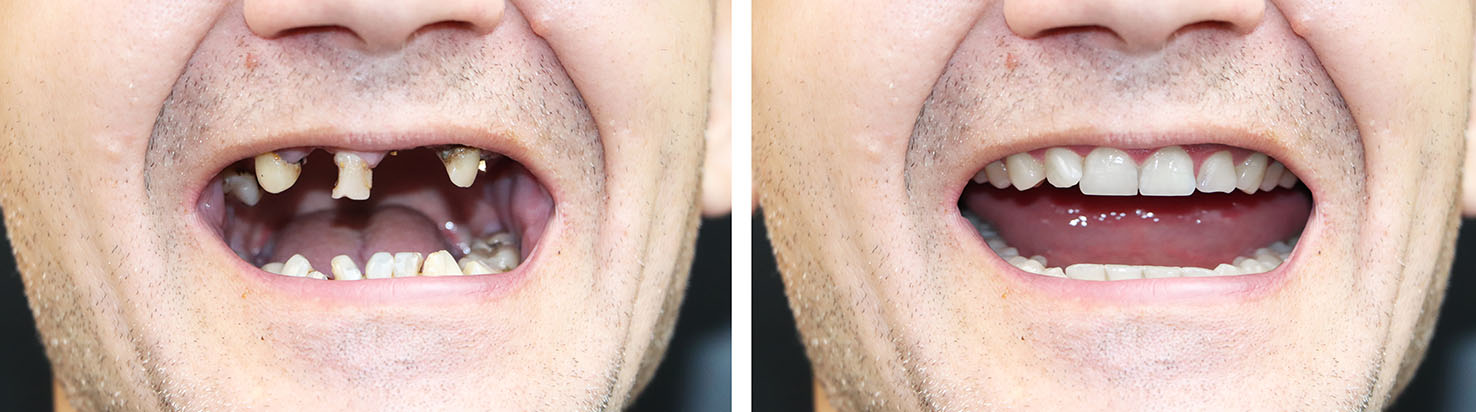
When a single tooth is missing, a single implant topped with a custom crown creates an independent, natural-looking replacement. This approach protects surrounding teeth from being altered and restores normal chewing force in the area without relying on neighboring teeth for support.
For two or more adjacent missing teeth, an implant-supported bridge replaces them without preparing adjacent natural teeth for crowns. Strategically placed implants carry the load for multiple replacement teeth, preserving healthy tooth structure while providing long-term stability and bone support.
Patients who need a complete upper or lower restoration can benefit from fixed full-arch approaches that use a small number of implants to support a permanent bridge. These solutions offer a non-removable restoration that looks and functions like natural teeth and can often be provisionally restored so patients have immediate improvement in appearance and chewing ability.
Implant-retained dentures use attachments on a few implants to secure an overdenture, significantly improving fit and retention compared with conventional removable dentures. This option increases comfort and confidence when speaking or eating while still allowing the denture to be removed for cleaning if preferred.
Determining candidacy for implant treatment begins with a thorough clinical exam and review of medical and dental history. We evaluate gum health, bone volume, and overall health considerations to plan an approach that fits each patient’s needs. Many individuals who thought implants were out of reach discover they are suitable candidates after a careful evaluation and, when needed, preparatory procedures.
Implant placement is a well-established outpatient procedure. The surgery itself is typically straightforward, with many patients comfortable using local anesthesia and, when appropriate, sedation options to minimize anxiety. The early stages focus on precise positioning so implants integrate predictably with the bone, followed by a healing interval before final restorations are attached.
Some treatment plans allow for provisional restorations on the same day as placement, while others follow a staged approach to ensure full osseointegration before the permanent restoration is seated. Throughout treatment, our team provides clear instructions for post-operative care and monitors healing closely to support an optimal outcome.
Long-term implant stability requires sufficient bone volume at the implant site. If bone has decreased due to prior tooth loss or periodontal disease, a bone graft can restore the necessary foundation to support an implant. Bone-grafting techniques vary by case, and many grafts integrate reliably when matched to the specific clinical need, allowing implants to be placed with confidence.
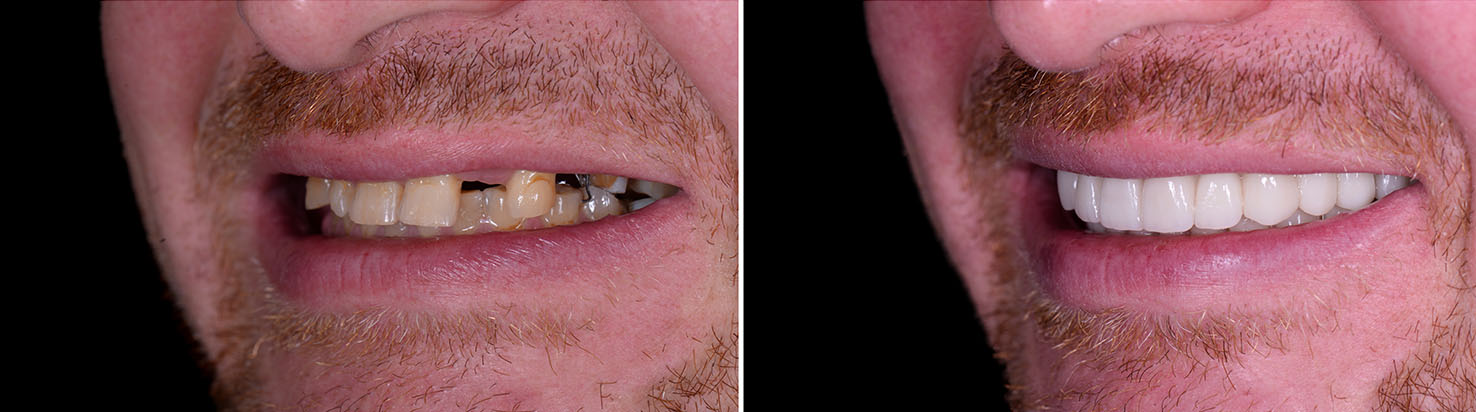
Successful implant treatment depends on thoughtful planning, surgical precision, and attentive restorative work. We emphasize clear communication so patients understand each phase of care, from diagnostics and imaging to surgical placement and the final restoration. With that approach, many people enjoy long-lasting function and a natural-looking result.
If you are considering implants to replace one tooth or an entire arch, our team can outline realistic expectations, necessary steps, and the timeline suited to your case. We tailor treatment around oral health, aesthetics, and lifestyle goals to deliver solutions that feel both natural and durable.
Dental implants offer a reliable way to restore missing teeth and protect oral health for years to come. If you’d like to explore whether implants are the right choice for your smile, contact Ashford Dental Sherman Oaks for more information and to schedule an evaluation. We’ll review your options and help you create a personalized plan that meets your needs.
A dental implant is a small biocompatible post surgically placed into the jawbone to replace a missing tooth root and provide a stable foundation for a restoration. Through a process called osseointegration the implant bonds with the surrounding bone, creating a durable anchor that supports crowns, bridges, or overdentures. The restorative components are then attached to the implant to restore chewing function and a natural appearance.
Because implants replace the tooth root they help preserve jawbone volume and the facial contours that depend on that support. Implants avoid placing load on adjacent natural teeth, which can be important when protecting the health of surrounding dentition. Modern implant systems and digital planning tools allow clinicians to design restorations that match each patient’s anatomy and aesthetic goals.
Candidacy is determined by a comprehensive clinical evaluation that reviews gum health, bone volume, and relevant medical history. Many patients who have lost one or more teeth are eligible for implants, but conditions such as untreated periodontal disease or certain systemic illnesses may require management before placement. Tobacco use, uncontrolled diabetes, and medications that affect bone metabolism can influence treatment planning and may be discussed during evaluation.
Diagnostic imaging, including CBCT scans, helps assess bone quality and anatomical structures so the team can tailor the approach to each case. When necessary, preparatory procedures such as bone grafting or gum therapy can create the conditions needed for successful implant integration. A personalized plan outlines the sequence of care, timelines, and follow-up needed to achieve a stable restoration.
Restorative options range from single-tooth crowns supported by one implant to implant-supported bridges that replace multiple adjacent teeth. For patients needing a full-arch restoration, fixed solutions using four to six implants or implant-retained overdentures provide options that balance permanence, function, and hygiene access. The prosthetic choice depends on clinical findings, patient preferences, and functional needs.
Materials and design vary depending on aesthetic goals and occlusal demands, with custom crowns and bridges fabricated to match color and shape of natural teeth. Implant restorations may be provisionally restored during healing when appropriate, giving patients improved appearance and function while osseointegration completes. Collaborative planning with the dental laboratory ensures accurate fit and durable prosthetics.
Implant placement is typically performed as an outpatient procedure using local anesthesia and optional sedation to ensure comfort. The surgical phase focuses on precise positioning of the implant to respect nearby anatomy and maximize the potential for successful integration. Many patients experience only mild to moderate discomfort after surgery, which can be managed with prescribed or over-the-counter medications and careful home care.
A healing period follows during which the implant integrates with the bone; this interval commonly lasts several months but varies by case and implant location. Some treatment plans allow for provisional restorations on the same day, while others favor a staged approach to protect the implant during osseointegration. Regular follow-up appointments enable the clinician to monitor healing and move forward with the final restoration when appropriate.
Bone grafting is recommended when there is insufficient jawbone volume or density to support an implant securely, which can result from prolonged tooth loss, infection, or periodontal disease. Grafting materials may be autogenous, allograft, xenograft, or synthetic, and the choice depends on the clinical situation and desired outcome. Sinus augmentation is a specific grafting procedure used in the upper molar region when the sinus floor lies close to the proposed implant site.
Grafting procedures are planned using diagnostic imaging to determine the appropriate technique and volume of graft material needed for predictable results. After graft placement a healing phase allows new bone to form and integrate with the graft, creating a reliable foundation for later implant placement. In many cases modern grafting methods enable successful implant therapy for patients who might previously have been told they were not candidates.
Daily oral hygiene with brushing and interproximal cleaning is essential to maintain peri-implant health and reduce the risk of inflammation. Using a soft-bristled brush, floss, or interdental brushes around implant restorations helps remove plaque where it forms and preserves the supporting tissues. Avoiding habits that place excessive force on restorations, such as hard biting or using teeth as tools, also supports longevity.
Regular professional care is important and typically includes periodontal assessment, professional cleanings, and periodic radiographs to observe bone levels around implants. If early signs of tissue irritation or changes in stability occur, prompt evaluation can allow for conservative treatment to protect the implant. Establishing a maintenance schedule with your dental team helps preserve function and aesthetics over time.
As with any surgical procedure, implant placement carries risks such as infection, bleeding, nerve injury, or sinus complications depending on the site and anatomy. Careful preoperative planning, sterile technique, and experienced surgical execution reduce the likelihood of these events. Most complications are uncommon and can often be managed effectively when identified early.
Long-term issues can include inflammation of the tissues around an implant, known as peri-implant mucositis or peri-implantitis, as well as mechanical problems with the prosthetic components. Maintaining excellent oral hygiene and attending regular checkups are the primary strategies for preventing or limiting these complications. If complications arise, treatment options range from nonsurgical therapies to surgical intervention, depending on severity.
Dental implants are designed for long-term function and often remain stable for many years when properly maintained and placed in appropriate clinical conditions. Factors that influence longevity include the quality and quantity of supporting bone, the health of surrounding gum tissue, systemic health factors, and patient oral hygiene habits. The design and material of the prosthetic restoration, as well as occlusal forces, also play a role.
Routine maintenance visits allow clinicians to assess implant stability, monitor bone levels with radiographs, and address wear or damage to prosthetic components before they affect implant function. Timely intervention for issues such as loose screws, worn restorations, or tissue inflammation can extend the service life of implant-supported teeth. With attentive care many patients enjoy years of reliable function.
Unlike bridges, which rely on adjacent teeth for support, implants replace the tooth root and provide independent support for crowns or bridges without altering healthy neighboring teeth. Compared with conventional removable dentures, implant-supported solutions offer improved stability and chewing efficiency because they transmit occlusal forces to bone rather than soft tissue. Each option has distinct clinical requirements and trade-offs that influence the recommended approach.
The choice between implants, bridges, and dentures depends on factors including the number and location of missing teeth, bone availability, patient preferences, and long-term oral health goals. Implants often preserve jawbone and facial structure more effectively, while other restorations can be less invasive or require different maintenance routines. A comprehensive evaluation helps determine which solution aligns best with an individual’s needs.
Begin with a consultation where the clinical team reviews your medical and dental history, performs an oral exam, and acquires diagnostic imaging such as digital X-rays or a CBCT scan to assess bone and anatomical landmarks. This information allows the clinician to determine candidacy, identify any preparatory treatments needed, and recommend appropriate restorative options. The consultation also provides an opportunity to discuss timelines for surgical and restorative phases.
If implant therapy is recommended the practice will present a personalized treatment plan outlining the sequence of care, expected healing intervals, and the roles of any specialists or laboratory partners involved. Clear communication and scheduled follow-ups help ensure predictable progress from placement through final restoration. Patients who proceed with treatment receive monitoring and maintenance guidance to support long-term success.
Phone:
