Invisalign® for Teens

Clear, removable, and designed around how people live today, Invisalign® offers a contemporary alternative to traditional braces. Using a sequence of custom-made aligners and advanced digital planning, this treatment gently guides teeth into healthier, more attractive positions without drawing attention to the process.

Invisalign® for Teens

Invisalign® for Brides

Invisalign® for Travelers

Before & After Photos

Invisalign® Videos

FAQs

Invisalign® vs Braces

Invisalign® vs Direct-To-Consumer Aligners

Is Invisalign® Right For Me?

Invisalign® Costs
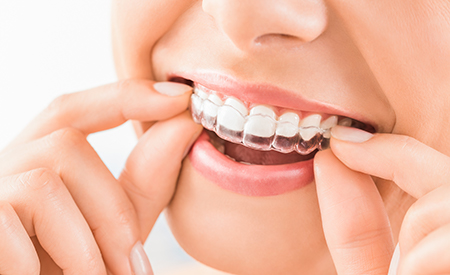
Because aligners are made from clear, medical-grade thermoplastic, they sit close to the teeth and remain almost invisible during wear. That discretion is a major reason many adults and older teens choose this approach — it lets them pursue orthodontic improvements while keeping a professional or personal image intact.
Beyond aesthetics, the removable nature of aligners makes daily oral hygiene and routine dental care simpler than with fixed appliances. Patients can brush and floss normally between aligner changes, which helps reduce the risk of decay or staining that sometimes accompanies long-term bracket-based treatment.
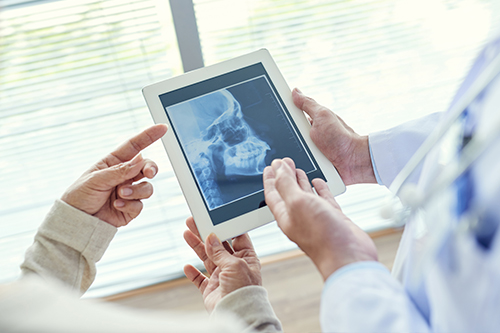
Contemporary clear aligner therapy begins with a detailed digital evaluation rather than a one-size-fits-all prescription. High-resolution intraoral scans and 3-D imaging capture tooth positions, bite relationships, and anatomical considerations so a precise treatment sequence can be mapped before a single aligner is delivered.
Using this digital blueprint, your provider sequences a series of aligners that apply gentle, targeted forces to move teeth predictably. Because the entire plan is visualized up front, clinicians can forecast key milestones and coordinate movements in a way that reduces unnecessary adjustments.
This technology also enables a preview of anticipated outcomes, giving patients a realistic sense of how their smile may change over time. That clarity helps set expectations and supports informed decisions about the scope and goals of care.
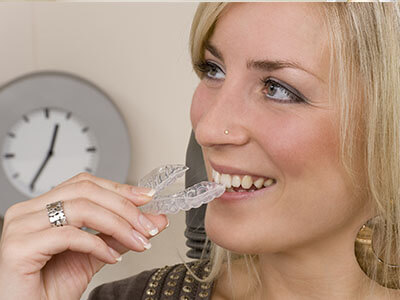
Aligners are intended to be worn for most of the day — typically around 20–22 hours — but they are removed for eating, drinking anything other than water, and for oral hygiene. Because they are removable, patients retain their usual diet and can easily maintain brushing and flossing routines, which supports healthier teeth and gums throughout treatment.
Most patients receive a new aligner or set of aligners every one to two weeks, depending on the treatment plan. Each new aligner is designed to make incremental adjustments, so changes are subtle and gradual. Routine check-ins with the treating doctor help ensure that progress aligns with the plan and that any necessary refinements are made efficiently.
Comfort is an important feature: aligners are smooth and fitted to each tooth, which generally reduces the irritation sometimes caused by brackets and wires. Slight pressure or temporary soreness is normal when switching to a new aligner, but these sensations typically subside within a few days.
Invisalign® has proven effective for a wide spectrum of alignment concerns, from mild crowding and spacing to certain bite issues. The system can help improve aesthetic symmetry, create more even contacts between teeth, and in many cases reduce functional problems linked to misalignment.
Complex cases may involve combined approaches; your doctor will determine whether clear aligners alone are appropriate or if adjunctive treatments (such as attachments, interproximal reduction, or elastics) are needed to achieve the planned movements. The flexibility of modern aligner systems allows for these tailored strategies without losing the benefits of a nearly invisible appliance.
Because good outcomes depend on careful diagnosis and oversight, successful treatment relies on a clinician who understands both the biomechanics of tooth movement and the nuances of each patient’s oral health. This clinical judgment is an essential part of achieving predictable, lasting results.
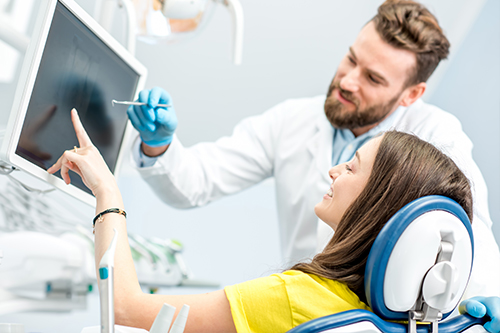
Our approach begins with a focused consultation to understand your goals, evaluate oral health, and determine whether Invisalign® aligns with your needs. We combine clinical expertise with digital tools to design a treatment plan that balances efficiency and long-term stability.
During treatment, we emphasize close monitoring and clear communication. Periodic visits allow us to track progress, manage attachments or refinements when indicated, and provide hands-on guidance for wearing and caring for aligners. The goal is to make the process straightforward and predictable while supporting your oral health along the way.
At Ashford Dental Sherman Oaks, we prioritize treatments that fit realistically into each patient’s life. Whether you’re considering orthodontic work for functional reasons or to improve the appearance of your smile, we’ll outline a plan focused on clinical integrity and patient comfort.

The first visit focuses on a thorough intraoral assessment. A fast digital scan captures accurate tooth positions and bite relationships, creating the data we need to plan treatment precisely.

We translate your scan into a step-by-step treatment plan that outlines how teeth will move. This plan guides the fabrication of your custom aligners and provides a clear view of projected outcomes.

Each aligner is manufactured to the plan’s specifications and designed to fit comfortably. The smooth, low-profile trays reduce soft-tissue irritation while delivering the forces needed for effective tooth movement.

From the initial fitting to the final retention phase, your provider remains involved to ensure the treatment is progressing as intended and to address any adjustments that may be required.
Short videos that explain the treatment process, aligner care, and common considerations for patients exploring clear aligner therapy.
*Invisalign® is a registered trademark of Align Technology, Inc.
Whether you’re beginning to explore options or ready to schedule an evaluation, Invisalign® represents a discreet, evidence-based way to align teeth with minimal disruption. If you’d like to learn more about how this treatment could fit your goals, please contact us for additional information and to arrange a consultation.
Invisalign uses a series of clear, removable aligners that are custom manufactured to move teeth into planned positions. Each aligner is made from medical-grade thermoplastic that fits closely to the teeth, keeping the appliance discreet during wear. The system offers an alternative to fixed bracket-and-wire orthodontics for many appropriate cases.
Treatment is driven by a digital treatment plan that maps every planned movement before aligners are delivered. Because aligners are removable, patients can continue normal oral hygiene routines throughout therapy. Regular clinical oversight helps ensure tooth movement follows the prescribed plan.
Treatment begins with a detailed digital evaluation that includes high-resolution intraoral scans and three-dimensional imaging to capture tooth positions and bite relationships. That digital model is used to design a sequential series of aligners, each one programmed to make small, controlled adjustments. Patients typically switch to a new aligner every one to two weeks as prescribed by the clinician.
Each aligner applies gentle, targeted forces to specific teeth to achieve the planned movement for that stage. Because the full sequence is visualized in advance, clinicians can anticipate milestones and coordinate complex movements while minimizing unnecessary adjustments. Periodic check-ins allow for refinements when needed to keep the plan on track.
Invisalign is often a suitable option for adults and older teens with mild to moderate crowding, spacing, or certain bite concerns. A clinical examination and digital records are needed to determine whether clear aligner therapy alone can achieve the desired result. Individual dental health, periodontal stability, and treatment goals all factor into candidacy.
More complex or severe orthodontic problems sometimes require adjunctive measures such as attachments, interproximal reduction, elastics, or a combination with other therapies. The treating doctor evaluates each case to recommend the most predictable approach. Patient commitment to wearing aligners as directed is also essential for a successful outcome.
Treatment duration varies by case complexity, treatment goals, and patient compliance, but many adult patients complete treatment in several months to about a year. Simpler alignment issues typically resolve faster, while cases that require major bite correction or staged movements take longer. The digital plan provides a projected timeline that the clinician reviews with the patient at the outset.
Wearing aligners for the recommended 20 to 22 hours per day and attending scheduled progress visits helps keep the plan on schedule. If refinements or additional aligners are needed, those steps are incorporated into the timeline to achieve the intended result. After active movement, a retention phase is implemented to preserve the new tooth positions.
Aligners are designed to be worn most of the day and removed for eating, drinking anything other than water, and for brushing and flossing. Removing aligners for meals helps prevent trapping food and reduces the risk of staining or decay. Patients should follow a cleaning routine for their trays to maintain hygiene and clarity.
Cleaning methods commonly recommended include rinsing aligners after removal, gently brushing them with a soft toothbrush and clear, fragrance-free soap, and using the provided case for storage. Avoid hot water or abrasive cleaners that can warp or scratch the thermoplastic. If you have specific questions about cleaning products, discuss them with your clinician to ensure compatibility with the trays.
Because aligners are removed for eating and drinking, there are generally no dietary restrictions related to the appliance itself compared with fixed braces. Removing trays before consuming hot beverages or colored foods helps prevent warping and staining. Chewing gum or sticky foods while wearing aligners is not recommended because they can adhere to or distort the tray.
For contact sports or activities with a risk of dental injury, patients should use an appropriate mouthguard; most sports mouthguards fit over aligners poorly, so it is usually best to remove the tray and use a custom or boil-and-bite guard as directed. Discuss any specific activity concerns with your clinician so they can recommend the safest approach while treatment is in progress.
Invisalign and traditional braces both move teeth predictably but differ in mechanics and patient experience. Invisalign offers a nearly invisible, removable option that can make oral hygiene simpler and reduce soft-tissue irritation associated with brackets and wires. Traditional braces remain the standard for certain complex movements and may be preferred when tooth rotations or vertical control require fixed attachments.
Modern aligner systems include auxiliaries such as attachments and elastics to broaden the range of treatable conditions, yet some severe or highly specialized cases are still better managed with fixed appliances. The choice between aligners and braces should be based on a careful clinical assessment and a clear discussion of expected outcomes and logistics. Your clinician will recommend the most clinically appropriate modality for your needs.
Invisalign is effective for a range of alignment concerns, including mild to moderate crowding, spacing, certain crossbites, and some forms of overbite or underbite. The system can improve occlusal contacts, dental alignment, and symmetry when used in cases that fall within its biomechanical strengths. Treatment planning will specify what movements are realistic with aligners alone and when adjunctive techniques are advisable.
When additional control is needed, clinicians may incorporate attachments, interproximal reduction, elastics, or staged treatment sequences to achieve intended results. Accurate diagnosis and comprehensive planning are critical to identify which orthodontic issues can be predictably corrected with clear aligners. The provider's judgment determines whether a combined approach will yield the best long-term stability.
The process begins with a consultation that includes an oral exam, digital scans, and discussion of treatment goals and expectations. After the aligners are fabricated, an initial fitting visit ensures trays seat properly and any needed attachments are placed. Routine monitoring visits are scheduled periodically to confirm progress and to make refinements when indicated.
Visit frequency depends on the prescribed protocol and individual response to treatment, but many patients have brief check-ins every six to ten weeks while advancing through aligner sets. These visits allow the clinician to evaluate fit, track planned movements, and address any concerns about comfort or wear. If refinements are required, additional aligners are planned and delivered to keep progress on course at the earliest opportunity.
Retention is a critical phase that follows active tooth movement to prevent relapse and preserve the new alignment. Most patients transition into a retainer regimen that may include removable retainers worn full time initially and tapered to nighttime use as recommended. Long-term retention plans vary by case and are determined based on the amount of movement achieved and individual risk of relapse.
Maintaining excellent oral hygiene, attending periodic dental checkups, and following the clinician's retainer instructions are essential for durable results. If retainers show wear or no longer fit properly, contact your provider promptly to have them evaluated and replaced as needed. At Ashford Dental Sherman Oaks, our team will review retention options and schedule follow-up care to support long-term stability.
To begin, request an initial consultation so a clinician can assess your oral health, discuss your goals, and capture digital records such as scans and photographs. During that visit the provider will explain the treatment process, outline expected milestones, and answer questions about what day-to-day life during treatment will look like. A clear treatment plan is developed from the diagnostic data and shared with you before aligners are ordered.
If you decide to proceed, the digital plan guides aligner fabrication and the sequence of visits for delivery and monitoring. Throughout active treatment you will have access to clinical support for fit, comfort, and any necessary refinements. To schedule a consultation or ask specific questions about Invisalign, contact Ashford Dental Sherman Oaks during regular office hours.
Phone: